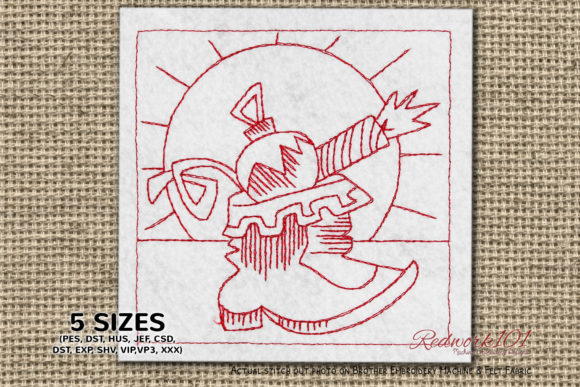
New Year Party Bluework Embroidery Design Review
First Impressions: A Festive Bluework Statement
When I opened the New Year Party Bluework embroidery file, the first thing that struck me was its clean, celebratory mood. Bluework, by nature, carries a timeless, almost heirloom quality, and this design leans into that with confidence. The imagery—likely a mix of champagne flutes, clocks, fireworks, or party accents—reads as elegant rather than loud, making it a refreshing departure from the typical gold-and-glitter New Year’s motifs. From a craft fair seller’s perspective, that’s gold. It means your handmade product will feel premium, not like a mass-produced decal. The optional box stitch mentioned in the description is a clever touch: it frames the design, but the note that the outer box color is often different unless it’s part of the design itself tells me this is a flexible, thoughtful digitizing choice. You can skip that color stop entirely for a true monochrome bluework look, or keep it for a subtle contrast border. This adaptability alone makes the design a smart addition to any small shop product lineup.
Where New Year Party Bluework Belongs in Your Booth
I mentally test every machine embroidery design against the products I actually sell at weekend markets. New Year Party Bluework passes with flying colors on several fronts. Let’s break down the best applications.
Tea Towels and Kitchen Linen
Tea towel embroidery is a craft fair staple, and this design feels made for it. The bluework palette on a natural cotton or linen towel creates a vintage farmhouse vibe that holiday shoppers love. Because the stitch density is likely moderate—bluework tends to avoid overly dense fills—the towel will drape well and remain functional. The design is large enough to be a focal point but not so complex that it overwhelms the fabric. I’d pair it with a simple hemmed edge and a hanging loop for an instant bestseller.
Tote Bags and Market Bags
A tote bag design needs to be visible from a few feet away, and New Year Party Bluework delivers. The monochrome blue thread on a natural canvas bag is crisp, festive, and highly photographable. Customers can use it as a wine bag for a New Year’s hostess gift—a natural tie-in to the Wine category. The optional box stitch can be omitted here to keep the design feeling airy and modern, or kept for a more structured, framed look. Either way, the bag will feel like a finished product, not a craft project.
Aprons and Kitchen Apparel
An apron embroidery with this design instantly elevates a simple bib apron into a boutique item. Picture a blue denim apron with the bluework design stitched in a slightly lighter shade—subtle, tonal, and utterly charming. The design’s size works well on the upper chest area or across a pocket front. Because the box stitch is optional, you can adapt the shape to fit the apron’s contours without distorting the main elements.
Pillow Covers and Home Decor
A canvas or linen pillow cover with New Year Party Bluework centered on the front is a seasonal decor item that doesn’t scream “disposable.” It’s the kind of piece a customer would leave out through January. The bluework style feels calm and sophisticated, so it doesn’t clash with existing farmhouse or modern decor. I’d hoop a firm cutaway stabilizer and use a light spray adhesive to keep the fabric drum-taut during stitching.
Patches and Small Accents
While this design is better suited as a larger focal piece, it can be reduced for a patch or small pouch. However, caution is key. The description suggests there may be tiny details—lettering, clock hands, firework bursts—that could lose clarity at smaller sizes. I’d test stitch at 80% and 60% of the original size on scrap fabric before committing to a batch of embroidered patch products. The optional box stitch, if reduced too much, might become a dense, stiff border, so skipping it for small patches is wise.
Production Wisdom: What Works and What Needs Watching
I’ve learned the hard way that a good design on screen doesn’t always translate to a good craft fair product. Here’s what I’d watch for with New Year Party Bluework.
- Stitch Density and Small Lettering: If the design includes a “Happy New Year” script or date, check the stitch density on the first sew-out. Bluework often relies on satin stitches for lettering; if they’re too dense, they can pucker lightweight fabrics. Use a sharp needle and a topper for textured towels.
- Thread Contrast on Dark Fabrics: Bluework is stunning on white, cream, and natural tones, but if you’re stitching on a navy or black tote, the blue thread might disappear. The design’s visual impact relies on contrast. For dark fabric, consider a lighter blue or even a pale silver-gray thread for a similar monochrome effect. Otherwise, stick to light backgrounds.
- Hoop Size and Placement: The description doesn’t specify a hoop size, so I’d open the embroidery file in your software and confirm the dimensions. A design that fits a 5x7 hoop is ideal for tea towels and small totes; a 6x10 or larger might be better for aprons and pillow covers. The optional box stitch may add to the overall width, so measure both with and without it.
- Fabric Texture and Stabilizer: On nubby hand towels or loose-weave linen, the details can sink. A good medium-weight cutaway stabilizer and a water-soluble topper will keep the stitches clean. For caps, the curved surface demands a curved hoop and a design that’s not too wide—the box stitch might be tricky on a cap brim, so omitting it is a smart move.
- Batch Production Friendliness: The optional box stitch means you can skip an entire thread change, speeding up production. If you’re making fifteen tea towels for a weekend market, every saved minute counts. The design’s repetition is predictable; once you dial in the stabilizer and thread tension, you can run multiple hoops efficiently.
Display and Photography: Selling the Bluework Mood
At a craft fair, your booth display needs to tell a story. New Year Party Bluework sets a mood of anticipation and refined celebration. I’d group finished products on a tiered stand—folded tea towels, stacked tote bags, and a hanging apron as the centerpiece. Use a simple backdrop: a wooden crate, a bottle of sparkling wine (since the design falls under the Wine category), and some fairy lights. The bluework catches the light and draws the eye. For online listings, a printable mockup is your best friend. Photograph the stitched product on a clean, light surface with natural light. The high contrast between the blue thread and the fabric photographs beautifully for Etsy thumbnails. The monochrome palette also makes color correction a breeze, so your product photos will look consistent across your small shop’s feed.
Practical Embroidery Designer Notes for This File
Before you stitch a single item for sale, here’s my non-negotiable checklist for New Year Party Bluework:
- Test on scrap fabric first. Use the exact fabric and stabilizer you plan to sell. This isn’t a suggestion; it’s the rule.
- Check thread contrast. Hold the finished test piece at arm’s length. Can you see the details clearly? If not, swap thread shades.
- Review spacing and small elements. Zoom in on the embroidery file in your software. Look for tiny gaps or minuscule letters that might close up with a slightly looser thread tension.
- Confirm hoop size. Measure the design dimensions with and without the optional box stitch. Label your hoops clearly.
- Inspect stitch density. Run a finger over the back of the test sew-out. Does it feel overly stiff or bulky? If so, adjust the density in your software or use a lighter stabilizer.
- Use the right stabilizer. For garments and towels, cutaway is safest. For tote bags, a tear-away might suffice if the design isn’t too dense.
- Create at least one real mockup. A physical product in your hand gives you confidence. It also becomes your photography sample.
- Compare fabric colors. Stitch the design on three different backgrounds: white, natural, and a light blue. See which sells the design best.
- Confirm commercial licensing. The description doesn’t state the license terms, so verify with the digitizer that you can sell finished products made from this digital embroidery file. Most small-shop-friendly designs include commercial use, but always check.
- Keep the optional box stitch choice intentional. Decide in advance whether you’ll include it for a particular product line. Consistency matters for your brand look.
Who Will Buy This and Why
Picture your customer: a woman in her thirties or forties, browsing the craft fair with a warm drink in hand. She’s looking for a hostess gift for a New Year’s Eve party, or a little something to refresh her own kitchen after the holidays. She spots a tea towel with New Year Party Bluework on it. The bluework feels nostalgic, like her grandmother’s embroidery, but the design is undeniably modern. She doesn’t have to think about whether it matches her decor—it’s blue, it’s neutral, it’s subtle. She picks it up, feels the quality of the stitch, and smiles. That’s the sale. That’s the power of a well-chosen machine embroidery design at a handmade market.
Final Booth-Ready Verdict
New Year Party Bluework is a versatile, sophisticated design that bridges the gap between holiday-specific and everyday elegance. Its optional box stitch gives you control over the final look, and the bluework palette ensures it appeals to a wide audience. For a craft fair product lineup, I’d invest in tea towels, tote bags, and a few aprons—all in light, natural fabrics. The design’s stitch density and detail level are well-suited to these surfaces, and the finished products photograph like a dream. As with any digital embroidery file, test thoroughly, respect the fabric, and always have a finished sample in your booth. When a customer can see and touch the quality, New Year Party Bluework will do the rest of the selling for you.