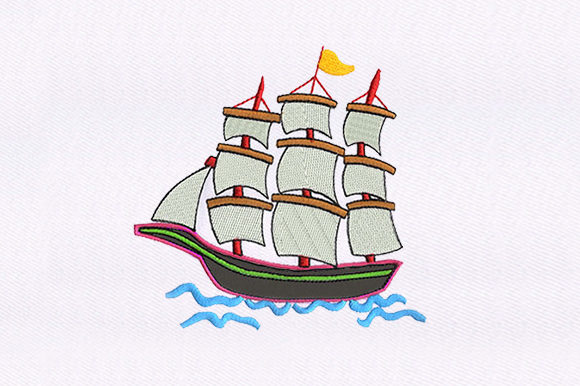
Ship Applique Embroidery Design: A Real-World Review
First Impressions: More Than Just a Beach Theme
When you first open the Ship Applique design, you get a sense of classic nautical style. It’s not a cartoonish or overly detailed ship; it has a clean, graphic feel that I think translates really well to embroidery. The mood is nostalgic and sturdy—it reminds me of a vintage signal flag or a sailor’s patch. The shape is balanced, with a strong central mast and sails that aren’t overly fragmented. This is good news for stitching: fewer tiny, isolated details mean less chance for thread breaks or misalignment on the final product. The personality is versatile. It feels less like a seasonal “beach” item and more like a timeless emblem, which opens up its application far beyond just summer projects.
Where This Design Shines in a Real Project
Let’s talk about a real scenario. I was preparing a custom order for a client who wanted a personalized gift for a sailor retiring from the coast guard. They requested an embroidered denim jacket. My mind went immediately to something bold and clear, not fussy. This Ship Applique design was a perfect candidate. The applique construction—where fabric pieces are stitched down under embroidery—means you can get wonderful color blocks for the hull and sails without relying solely on dense fill stitches. This reduces stitch count and makes the finished piece lighter and more flexible, which is crucial for a wearable garment like a jacket or a custom apparel sweatshirt.
It naturally belongs on items where a clean, recognizable symbol is key. Think embroidered patches for bags, tote bag design accents, or baby embroidery on a nursery blanket where you want a gentle theme. For small shop product like a handmade product apron or a kitchen towel, it provides a focal point without being too busy. For Etsy sellers creating holiday embroidery gifts, it could work for a Father’s Day pillow cover or a graduation gift for someone maritime-minded. The value comes from its adaptability. It’s a strong design asset.
Visual Appeal and Professional Presentation
Stitched out, a design like this relies heavily on the satin stitch borders and the fill stitch areas for the applique. The clarity will be excellent if the file is well-digitized, which I assume it is given the range of formats provided—from PES to JEF to DST. That format list is comprehensive, covering most major machine embroidery design brands, which is a huge point of trust for craft business owners. It means you can confidently use it across different machines without conversion worries. On a dark fabric, like a black cap, using a light-colored applique fabric for the sails against a dark thread outline would create a striking, high-contrast look that customers would recognize instantly. This visual appeal directly boosts product value and customer trust in your craftsmanship.
Careful Application: Where to Pay Attention
While I’m optimistic about this design’s performance, any embroidery project requires some forethought. Given its likely size—which you should always confirm from the specific file before hooping—be cautious on very small hoop sizes. If you try to shrink it down too much for, say, a baby clothes sleeve, those satin stitch lines defining the ship’s rigging might become too thin and fragile. They could look crowded or even break during stitching or after frequent washing.
Textured fabrics like toweling or loosely woven linens might challenge the crisp edges of the applique. You’ll need a robust stabilizer to keep everything anchored. On stretchy fabric like a t-shirt, consider a cut-away stabilizer to maintain the shape long-term. The design seems to have areas of solid color, so stitch density should be checked on a scrap first to ensure it doesn’t become too stiff on lightweight materials. Also, for curved surfaces like caps, the straight lines of the ship’s mast might need careful placement to look centered and upright.
For commercial embroidery or producing batches of items, this is a efficient design because applique can often be quicker than pure fill-stitch embroidery. But always, always test the design on scrap fabric first with your chosen thread colors and applique fabrics. This is non-negotiable for professional results.
Designer Notes for a Flawless Finish
My practical checklist for using this embroidery file would be:
- Stitch it out on a scrap of your target fabric texture first. Observe the running stitch and satin stitch quality.
- Review stitch density by feeling the stitched sample. Is it too rigid for a baby blanket? Too loose for a durable patch?
- Check thread color contrast. Play with combinations. A navy applique hull on a light background versus a red hull on a dark background changes the whole feel.
- Compare light and dark fabric backgrounds in your mind or via printable mockup software. This helps in planning product lines.
- Inspect small details like the flag or the thin lines. Are they clean in your test?
- Use the proper stabilizer for the project. An applique on a pillow cover might need less stabilization than on a custom apparel item that will be worn and stretched.
- Crucially, confirm licensing before selling finished items or digital products. While the file formats are listed for use, the license terms are not provided here. You must verify if this digital embroidery file is intended for personal use, commercial embroidery projects, or as a digital product for resale. Never assume.
The Bottom Line for Your Creative Business
The Ship Applique design is a solid, versatile applique design. It’s not overly complex, which makes it reliable for a range of finished products from personalized gifts to small business merchandise. It carries a professional, graphic quality that enhances brand consistency if nautical or classic themes are part of your shop’s style. Its giftability is high for the right recipient.
For embroidery designers and creative entrepreneurs, the key is to treat it as a robust building block. Pair it with text for a custom retirement gift, use it solo on a tea towel for a boutique, or incorporate it into a larger embroidery project for nursery decor. Its success hinges on your thoughtful application—the right fabric, the right stabilizer, and the right context. With that care, it will stitch out beautifully, creating a product that feels handmade, professional, and deeply satisfying to make.