Bell New Year Bluework: A Craft Fair Seller’s Review
First Impressions of Bell New Year Bluework
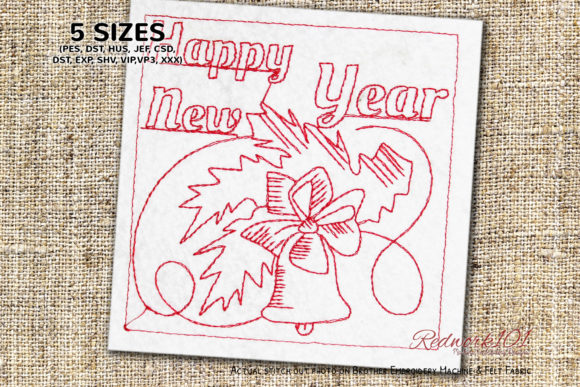
When I first opened the Bell New Year Bluework digital embroidery file, I immediately felt that classic, handcrafted charm that sells so well at artisan markets. This isn’t a loud, flashy design. It leans into the timeless elegance of bluework — a single-color or limited-palette blue embroidery style that reminds me of heirloom linens, vintage kitchen textiles, and carefully curated farmhouse decor. The bell motif instantly reads as celebratory, and the New Year theme gives it a seasonal edge without being so specific that it can’t live in a home year-round. The optional box stitch frame adds a decorative border that can elevate the design into a true focal piece, but the fact that you can skip it altogether makes this a flexible machine embroidery design for different products and price points.
I see this design as quietly confident. It’s not shouting for attention, but it will catch the eye of a customer who appreciates subtle, refined handmade goods. The bluework color palette is soothing, and when stitched on natural linen, oatmeal cotton, or soft white fabric, it creates a look that feels both premium and approachable. For a craft fair booth, that’s a winning combination. You want designs that stop people in their tracks, and Bell New Year Bluework has that gentle pull that invites a closer look, especially when displayed on a stack of neatly folded tea towels or a row of tote bags hanging at the front of your table.
Designing Products for a Craft Fair Booth
I started mentally placing this design on every product I plan to bring to my next weekend market. The Bell New Year Bluework motif is medium-sized by nature, with a bell shape that can scale well without losing its identity. Here’s how I see it working across the product lineup that craft fair sellers like us rely on.
- Tote bags — A natural fit. A centered placement on a canvas tote makes an instant giftable item. The bluework style pops beautifully on cream or natural cotton, and the optional box stitch turns it into a mini work of art.
- Aprons — A bib apron with this design near the chest or on a pocket creates a high-end boutique look. It’s perfect for the customer who loves to host New Year’s brunch or wants a thoughtful kitchen gift.
- Tea towels — This is where I think Bell New Year Bluework truly shines. A flour sack towel with this design in a corner, paired with a simple hem, becomes a low-cost, high-perceived-value item. I can already picture stacks of them on my booth table, tied with baker’s twine.
- Pillow covers — A lumbar pillow cover with the design centered and the box stitch frame included would anchor a cozy winter vignette. It’s a home decor piece that works from December through January beautifully.
- Fabric pouches — Small zipper pouches with the design on the front make delightful little gift bags or party favors. They’re quick to stitch and easy to sell in multiples.
- Embroidered patches — If the design is digitized with a clean edge and the box stitch acts as a border, it can be finished as a standalone patch. I’d test this on felt or twill backing and offer them as iron-on patches for jean jackets or backpacks.
- Caps — A low-profile cap with the bell design on the front panel could work, but I’d be mindful of the curved surface. The optional box stitch might need to be simplified or removed to avoid distortion.
For booth display, I’d group Bell New Year Bluework items into a dedicated “New Year Refresh” collection. A small chalkboard sign with “Hand-Embroidered Bluework” and a few finished samples hanging at different heights would draw the right crowd. The blue thread unifies the collection, making my table look cohesive and intentional, which builds trust with buyers.
The Practical Side of Stitching Bluework
From a production standpoint, I love designs that are friendly to my machine and my time. Bluework, by definition, uses fewer thread colors, and in this case, the description hints that the outer box color can be different or even skipped entirely. That’s a huge time-saver. If I’m batching out twenty tea towels for a market, I don’t want to stop for constant color changes. I can run this design in a single beautiful blue thread — maybe a soft chambray, a deep indigo, or a vintage denim shade — and let the stitch texture do the talking.
The stitch density is something I’ll watch closely. If the box stitch is included, it might add a dense border that requires a sturdy stabilizer and a sharp needle. I’ll plan to test a scrap piece first. If the box feels too heavy for lightweight fabrics, I’ll simply omit it. The description explicitly says the box stitch is optional, and the outer box color can be skipped, which tells me the designer intended this flexibility. That’s a thoughtful touch for us makers who need to adapt designs to different materials.
Thread colors are where I can really play. Although it’s called bluework, I might experiment with a soft navy, a dusty periwinkle, or even a metallic blue for a subtle sparkle that catches the light at a craft fair. Because the design is monochromatic, the stitching itself becomes the texture, and the fabric texture underneath will influence the final look. A textured linen will give a rustic, homespun feel, while a smooth cotton sateen will read as more polished.
How This Design Performs Across Different Items
Let’s break down real-world performance. I’ve learned that not every beautiful design works on everything. Here’s my honest assessment of Bell New Year Bluework on the products I create most.
On tea towel embroidery, this design is a star. The absorbent fabric holds stitches well, and the lack of pile means every detail shows. I’d use a medium-weight cutaway stabilizer and a 4x4 or 5x7 hoop. For a faster production line, I’d skip the box stitch and just stitch the bell. It still reads as a complete design.
For tote bag designs, a canvas tote needs a sturdy stabilizer. The bell with the box stitch looks like a framed print, and customers perceive it as a premium item. I’d price it accordingly. For apron embroidery, I’d place it on the bib or a pocket, keeping the design size moderate so it doesn’t overwhelm the wearer. A small version without the box stitch could also go on the apron ties.
When it comes to embroidered patches, I’d digitize or use the file with the box stitch as a border, then cut it out with a hot knife or scissors. The bluework style makes a patch that feels collectible and artsy. I’d attach a backing card and sell them individually or in sets.
Caps are trickier. The curved surface means any dense box stitch might pucker. I’d test the design without the box stitch first, and I’d reduce the size to fit the front panel comfortably. If the bell has any tiny details, like a clapper or small lettering, I’d check that they stitch cleanly on a structured cap.
For pillow covers and fabric pouches, the design is low-risk. Flat surfaces, easy hooping, and a beautiful result. I can see this as a popular item in a winter market booth, especially if I offer a few color variations — all blue, but in different shades.
Photography and Online Listings
As an Etsy seller or small shop owner, I know that a design’s success depends on how well it photographs. Bell New Year Bluework is a dream to shoot. The blue thread on a light background creates a clear, high-contrast image that looks crisp even in a thumbnail. I’d style it on a rustic wooden board with some fairy lights and a sprig of greenery for a cozy winter vibe. A printable mockup can also be made by scanning the stitch-out and placing it on digital product images, which is a lifesaver for listing new items before they’re physically produced.
For online listings, I’d highlight the bluework tradition in the title and description, using keywords like “handmade embroidery,” “New Year decor,” and “farmhouse kitchen towel.” The design’s simplicity means it won’t get lost in a busy photo, and buyers scrolling through hundreds of listings will be drawn to the calm, classic look. I’d also include a close-up shot of the stitch texture because that’s what sells the quality of the finished product.
Important Cautions for Embroidery Makers
No design is perfect for every situation, and I’ve learned to check a few things before committing to production. Here’s what I’d watch out for with Bell New Year Bluework.
- Dense stitch areas — If the optional box stitch is heavily stitched, it can create a stiff, raised border. On soft fabrics, this might feel uncomfortable. Test it on your chosen material.
- Tiny details — Bells often have small elements like a ring, a clapper, or decorative lines. If the design is scaled down too much, these could become muddy or thread breaks. Always stitch a sample at the intended size.
- Small lettering — If the design includes any text, like “New Year” or a year number, check that the letters are large enough to read clearly. I’d avoid using it on highly textured towels where letters might disappear.
- Textured towels — On a waffle weave or terry cloth, the blue thread might sink into the texture. A topper or a water-soluble stabilizer on top can help the stitches sit on the surface.
- Curved cap surfaces — As mentioned, caps need careful hooping and possibly a design size reduction. The box stitch might need to be ditched to prevent puckering.
- Dark fabric — Bluework on a dark background can look muddy. I’d stick to light or medium fabrics unless I’m using a very light blue thread and I’ve tested the contrast.
- Clarity at smaller sizes — If you plan to use this on a tiny pouch or a collar, run a test stitch. The bell might lose its shape if details run together.
Designer Checkpoints Before Your First Stitch
Every time I work with a new digital embroidery file, I follow a mental checklist. For Bell New Year Bluework, here’s what I’ll do before I even think about listing a product.
- Test on scrap fabric — I’ll stitch the design on the exact fabric I plan to use for my finished products. This shows me how the stitches lay, whether the stabilizer is adequate, and if any adjustments are needed.
- Check thread contrast — I’ll compare a few blue thread spools against my fabric swatches. The right shade of blue can make the design pop or fade. I want it to be clearly visible from a few feet away.
- Review spacing — If the bell has any internal gaps or lines, I’ll check that they aren’t too close together. Good spacing prevents thread breaks and keeps the design clean.
- Confirm hoop size — The design file should indicate the stitch dimensions. I’ll make sure my hoop can accommodate it comfortably, with no risk of the hoop hitting the needle.
- Inspect stitch density — If the design is too dense for my fabric, I might adjust the tension or switch to a lighter stabilizer. In some cases, I might even reduce the density in my software, but that’s an advanced move.
- Use the right stabilizer — For tea towels and linens, I’ll use a fusible mesh cutaway. For tote bags, a medium-weight cutaway. For caps, a firm tear-away. The stabilizer is just as important as the design itself.
- Create at least one real mockup — I’ll stitch a final sample exactly as it will be sold. This becomes my display piece and my photography sample. It also lets me check for any last-minute flaws.
- Compare fabric colors — I’ll stitch the design on two or three different background shades. What looks stunning on natural linen might be dull on optic white. I want to offer the best version to my customers.
- Confirm commercial licensing — Before I sell any finished product, I’ll double-check the license that came with the embroidery file. Most digital designs allow for small-scale commercial use, but it’s my responsibility to verify. I’ll look for any restrictions on the number of items or resale of the file itself.
Final Thoughts on Selling Bell New Year Bluework
After spending this time reviewing the design, I’m confident that Bell New Year Bluework will earn its place in my craft fair lineup. It’s the kind of design that gets better with repetition — once you find the right fabric, the perfect thread color, and the ideal hoop size, you can stitch it out with confidence. The optional box stitch gives me two products in one: a simple, minimalist bell for everyday items, and a framed, decorative version for giftable, premium pieces.
For my small shop product range, this design adds a seasonal touch without being disposable. After New Year’s, the bell remains a classic symbol of celebration, and the bluework style keeps it from feeling tied to a specific year. That means I can sell it throughout the winter and even into spring. It’s a smart addition to any commercial embroidery collection, whether you’re selling at markets, on Etsy, or in a boutique.
I’ll be stocking my booth with a few key items: a stack of tea towels, a hanging row of tote bags, and a small basket of embroidered patches. The blue thread will tie them all together, and I’m already imagining the conversations with customers who appreciate the quiet beauty of bluework. If you’re on the fence about Bell New Year Bluework, I’d say go for it — but do your stitch tests, play with the optional elements, and let the design earn its keep in your handmade collection.